What is Botox?
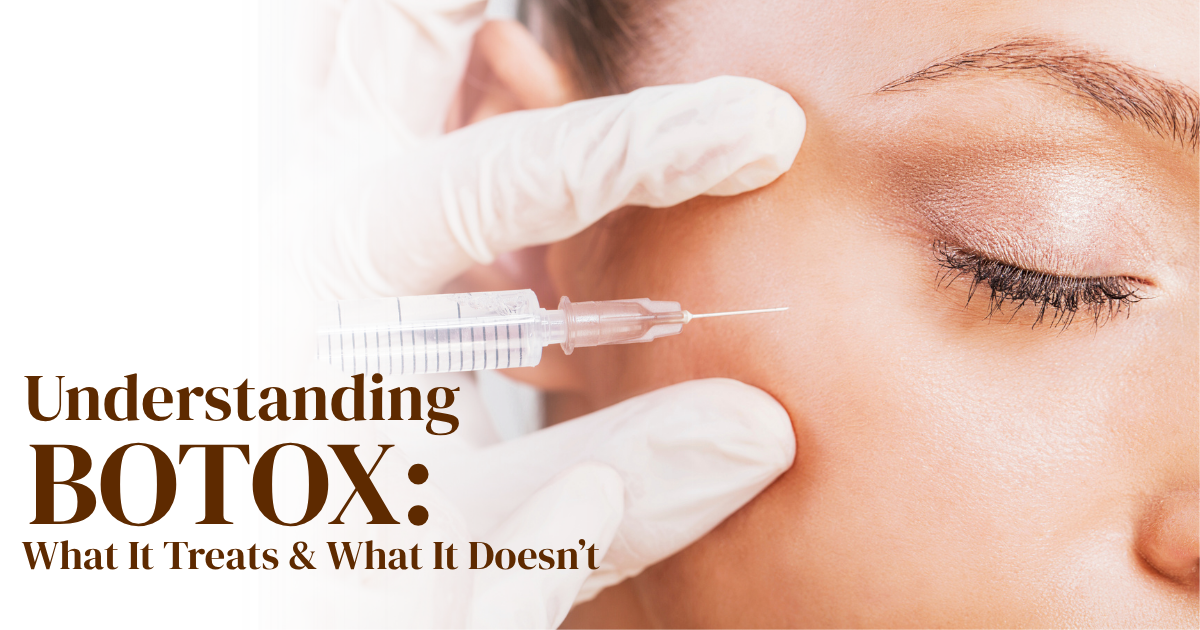
Botox is one of the most recognized names in aesthetic medicine, yet it remains one of the most misunderstood. Derived from Clostridium botulinum, this neurotoxin has evolved from a niche medical treatment to a global phenomenon. In 2023, over 9 million Botox procedures were performed in the United States alone, making it the most popular minimally invasive cosmetic treatment. While the majority of use is cosmetic, approximately 30% of Botox injections are performed for medical conditions like chronic migraine and muscle spasticity. Whether you’re looking to smooth a few lines or manage a chronic medical condition, understanding the science and safety behind the syringe is essential.
 How It Works: The Mechanism of Action
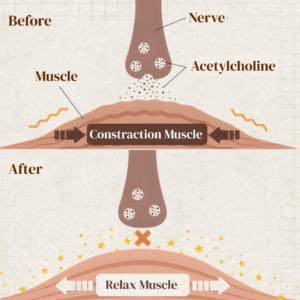
Botox doesn’t actually “fill” wrinkles. Instead, it is a neuromodulator.
Its primary job is to intercept the communication between your nerves and your muscles. Normally, nerves release a chemical messenger called acetylcholine to tell a muscle to contract. Botox temporarily blocks this release. When the muscle doesn’t receive the signal to move, it remains relaxed.
In a cosmetic context, this relaxation allows the overlying skin to smooth out, preventing the “etching” of deep lines. In a medical context, it stops the involuntary contractions or overactive signals that cause pain or dysfunction.
FDA-Approved vs. Off-Label Uses
The versatility of Botox is reflected in its dual nature as both a beauty tool and a pharmaceutical workhorse.
FDA-Approved Cosmetic Uses:
- Glabellar Lines: The vertical “11” lines between the eyebrows.
- Crow’s Feet: The fine lines at the outer corners of the eyes.
- Forehead Lines: Horizontal creases caused by brow elevation.
FDA-Approved Medical Uses:
- Chronic Migraine: For adults who suffer from headaches 15+ days a month.
- Hyperhidrosis: Severe underarm sweating that topical treatments can’t control.
- Overactive Bladder: Reducing urinary incontinence and frequency.
- Cervical Dystonia: A neurological disorder causing severe neck muscle spasms.
- Spasticity: Muscle stiffness in the elbows, wrists, fingers, or lower limbs.
Common “Off-Label” Uses: “Off-label” refers to legal, common uses that have not yet gone through the specific FDA approval process for that exact area. These include:
- Masseter Botox: Injected into the jaw to slim the face or treat temporomandibular joint (TMJ) dysfunction or teeth grinding.
- The “Lip Flip”: A small amount injected above the upper lip to make it pout outward.
- Gummy Smile: Relaxing the upper lip so it doesn’t rise too high when smiling.
 Expected Results and Timeline
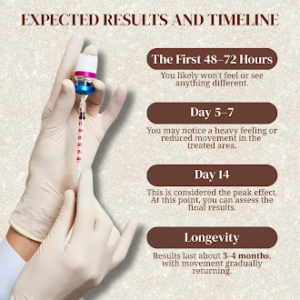
Botox is not an “instant fix.” It requires a bit of patience as the protein binds to the nerve endings.
- The First 48–72 Hours: You likely won’t feel or see anything different.
- Day 5–7: You will begin to notice a “heavy” feeling or a reduction in movement in the treated area.
- Day 14: This is considered the peak effect. At this point, you can assess the final results.
- Longevity: Results typically last 3 to 4 months. As your body slowly metabolizes the protein and creates new nerve receptors, muscle movement will gradually return.
Safety Profile and Contraindications
Botox has a long-standing safety record, but it is still a medical procedure that requires a qualified hand.
Common Side Effects: Most side effects are localized and temporary, such as mild bruising, swelling, or a “tight” headache immediately following the injection.
Who Should Avoid Botox (Contraindications):
- Neuromuscular Disorders: People with conditions like amyotrophic lateral sclerosis (ALS) or Myasthenia Gravis face a higher risk of systemic weakness.
- Pregnancy and Nursing: There is insufficient data on the effects on a developing fetus or infant; most providers delay treatment as a precaution.
- Active Infection: You should never have an injection near an area with an active skin infection or breakout.
- Allergies: Specifically, an allergy to cow’s milk protein (found in some versions like Dysport) or any components of the Botox formula.
Call 346-355-5999 to schedule your consultation and find out how Botox can help you achieve a refreshed look or manage chronic symptoms.